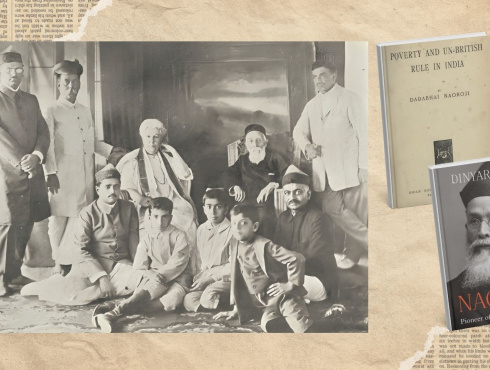
On the 201st birth anniversary of Dadabhai Naoroji, widely known as the “Grand Old Man of India”, The Daily Star speaks with historian Dinyar Patel about Naoroji’s pioneering role in shaping Indian nationalism, his influential “drain theory” and his enduring political and intellectual legacy. Patel is the author of Naoroji: Pioneer of Indian Nationalism, published by Harvard University Press in 2020, and Associate Professor of History at the S. P. Jain Institute of Management and Research in Mumbai.
The Daily Star (TDS): Before discussing Naoroji’s intellectual and political ideas, could you briefly give us an overview of some key events in his life that significantly shaped his personality and the future course of his actions?
Dinyar Patel (DP): Perhaps the most significant life event for Naoroji was his youth. Naoroji grew up in relative poverty in Bombay, with his mother having to scramble for money and support after his father passed away. Naoroji had great respect for his mother for overcoming these obstacles. And, although she was uneducated and illiterate, she prioritised education for her son. After her son studied in a traditional pathshala for a few years, Naoroji’s mother had the foresight to enrol him in a unique experiment in public education in Bombay, one where poor students did not have to pay tuition. Subsequently, Naoroji received what was probably the best primary and secondary education possible in western India. The experience made him a lifelong advocate of quality, state-supported universal education (something India continues to struggle with).
His mother also influenced Naoroji’s support for female education: he was one of a generation of young reformers in the 1840s and 1850s who broke orthodox taboos and opened schools for Hindu and Parsi girls. In his youth, therefore, we see the roots of several of his political positions: a concern for, and understanding of, poverty; a commitment to the spread of education; and support for women’s rights.